PHYSIOLOGY OF SMELL (AROMAYOGA)
 Anyone who knows me knows that I am passionate about both Western and Eastern anatomy and physiology, which is why my courses always include a module on this subject. AROMAYOGA® was no exception. I believe it is absolutely vital that anyone working with aromatic plants for subtle purposes (emotional, mental, spiritual) – as is the case with the students on our training course – understands the physiological mechanisms that occur when we smell these plants, so that they can use them appropriately.
 That’s why, on our 50-hour AromaYoga® Training Course, you’ll learn:
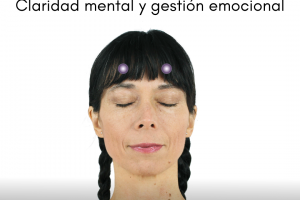
 It is only when you breathe in deeply that the particles reach the olfactory epithelium (the upper part of the nasal cavity) and, through it, the limbic system (the emotional centre). That smell is the only sense that does not necessarily have to pass through the thalamus to be processed. One of the olfactory pathways leads to the amygdala (the centre that primarily regulates fear and instinctive emotions) and from there influences the hypothalamus and the pituitary gland, which act as “our central computer”, carrying out important functions for the wellbeing and balance of the body and mind. The piriform cortex (in the temporal lobe) connects to the orbitofrontal cortex. The second allows us to form an “expectation” in response to a smell – in other words, it enables us to distinguish between “pleasant” and ‘unpleasant’ smells – whilst the first stores the experience. That “conscious smell” influences our psyche and body, even when the scent is below the threshold of perception – that is, when we do not smell it or are unable to recognise the aromatic particles The sense of smell directly influences our emotions and olfactory memory (limbic system), but through conscious effort we can also influence cortical areas of cognition and processes in the neocortex The pineal gland (which features in our logo) plays an important role in the spiritual process, and “conscious smelling” is a way of “activating” it.
 Image created by Dr Helena Chacón for the Holistic Yoga® AromaYoga® training course.
 AROMAYOGA® 50-HOUR TRAINING COURSE
 The Sacred Path of Plants
 THEORETICAL AND PRACTICAL TRAINING
focused on your SELF-CARE + PRACTICE + TEACHING OF YOGA
Yoga + Aromatherapy + Subtle and Sacred Herbalism
info@aromayoga.e

You may also like
Yoga, Major Meridians and Myofascial Tracts
14/02/2024