
Types of Qi according to Chinese Medicine. Links with Yoga and Ayurveda
The concept of Qi It is widely used in Chinese medicine and forms the basis of its practice. Qi is usually defined or translated as “energy” which is relatively similar to the concept of PRANA in yoga. Do not be misled by the idea of “energy” as something subtle and ethereal, as in Chinese medicine there is no real boundary between matter and energy; thus, everything in the Universe is linked to the concept of Qi. It is Universal Energy, present in all manifestations of nature. Its movement and transformation give rise to the world as we know it. From a health perspective, for a body to be alive, Qi must manifest itself by performing vital functions; for example, by giving “life” to the blood, bodily fluids, organs and viscera, and by circulating through the meridians. Its intrinsic quality is “movement”.
QI (ENERGY) can be obtained in various ways. We are all born with a certain amount of inherited energy (Anterior Heaven), a sort of “standard battery”, and then there is a type of energy that we gain or expend through our lifestyle habits relating to diet, breathing, rest and stress, etc. (Posterior Sky). The sum represents our available energy in our day-to-day lives
Previous Heaven or Pre-natal Energy
The energy that comes from our ancestors (inheritance), from the climate, from the astrological configuration at the time of conception and from the mother’s pregnancy is known as Prenatal Energy or Pre-Heaven Qi (Yuan Qi)
Posterior Sky or Post-natal Energy
The energy we acquire after birth through food, breathing, our lifestyle habits (levels of stress and rest) and our environment is known as Postnatal Energy or Posterior Heaven, and is subdivided into several types
TYPES OF IQ
Previous Heaven or Pre-natal Energy
YUAN QI – Original QI
Original Qi, Source or Prenatal, forms part of the Essence (Jing) of all beings and determines the unique nature of each human being. This type of energy predates duality (before Yin and Yang) and is therefore prior to birth. From a Western perspective, it is associated with DNA (genetics), whilst in Traditional Chinese Medicine it constitutes our essential and constitutional imprint, formed by the astrological configuration at the time of our conception, the moment of conception itself, the characteristics of the pregnancy, and the Essence of our parents and ancestors. On a spiritual level, it carries karmic imprints or the seeds of destiny. This type of energy is stored in the Kidney and, once we are born, is distributed throughout the body via the Triple Burner (San Jiao) and the Extraordinary Meridians. The work of Chinese Taoist Alchemy consists of transmuting and resetting our inherited conditioning and labels so that we may live a long earthly life connected to our Essential Nature. In our day-to-day lives, it is important that we maintain good lifestyle habits (Posterior Heaven energy) so as not to meet our vital energy needs using the energy of the Anterior Heaven (our Essential Energy), as this type of energy is very difficult to replenish.
* THE CONNECTION BETWEEN YOGA AND AYURVEDA. We find that the equivalent is the Kundalini energy, powerful “latent” energy that holds our divine potential and is stored in the pelvic region. In yoga, our karmic imprints – that is, the imprint of our soul before birth – are called “Samskaras”. The Samadhi of a yogi, is based on the purification of these imprints through the rising or awakening of the Kundalini energy along the channel Sushumna (which is associated with the Du Mai in TCM)
In Ayurveda, the traditional medical science of India, importance is also attached to the Essence that an individual brings with them before birth, as every human being is born with a specific pre-natal configuration that shapes their own Nature. Furthermore, Ayurveda places great emphasis on maintaining healthy lifestyle habits in order to avoid depleting this type of energy, which is very difficult to regenerate.
What are your gifts, resources and essential nature?
What energy do your origins and your ancestors give you?
Do you use a lot of Pre-Natal Energy in your day-to-day life?
Posterior Sky or Post-natal Energy
This energy combines with the Upper Heaven to become different types of Qi within our bodies:
GU QI – Food Qi
It is the Qi that we obtain from the Food thanks to the functioning of the Stomach and Spleen. This energy is derived both from the quality of the food and from the processes of digestion, absorption and transport of nutrients.
* THE CONNECTION BETWEEN YOGA AND AYURVEDA. Following the steps of Classical Yoga, Ahimsa, involves doing no harm to oneself or others, including practising “mindful” eating. A yogic diet, or sattvic It consists of a natural, local, seasonal, vegetarian diet that promotes meditation and a balanced state of mind. Nowadays, we know that our intestines are connected to our central nervous system and, therefore, their influence is not only physical and chemical but also mental. That is why the ancient yogis placed such great importance on what they ate and how they ate it.
Ayurveda also places great emphasis on diet, devising a comprehensive nutritional system that respects each individual’s unique constitution and focuses on the ability to digest (Digestive Agni) such as the ability to extract energy from food. In fact, in Ayurveda, the saying is not “you are what you eat” but “you are what you extract from what you eat”.
What sort of diet do you follow?
How much vital energy does your food contain? In other words, is it natural, organic food grown with care, or is it processed food produced through intensive farming and laden with “agrochemicals”?
Have you noticed the link between what you eat and your state of mind?
KONG QI – The Qi of Breathing
It is the Qi that we obtain from the Breathing thanks to the functioning of the lungs and large intestine.
* THE CONNECTION BETWEEN YOGA AND AYURVEDA. In yoga, there are various techniques that focus on enhancing vital energy (Prana) through breath control exercises (Pranayama) or by purifying our respiratory and excretory systems using Shatkarmas, self-care practices involving purification and cleansing, such as Jala Neti and Sutra Neti (cleansing of the nasal passages) and Basti (colonic cleansing).
Ayurveda also emphasises techniques for purifying and cleansing the nostrils through various types of Nasya and colonic cleansing, or Basti, which, unlike Yoga – which uses salt water – are carried out using medicated oils.
In other words, in both India and China, emphasis is placed on the connection between the respiratory and excretory systems and the importance of keeping them healthy in order to manage the energy derived from breathing.
How aware are you of your breathing?
Have you noticed any changes in your breathing, your emotions, your energy levels, etc.?
Have you noticed any connection between your large bowel and your lungs?
ZHONG QI – Gathering Qi
It’s called Reunion Qi, because it brings together the energy we derive from BREATHING + NUTRITION. It is stored in the chest and distributed through the work of the Lungs and the Heart. For this to happen, GU QI must rise to the chest whilst KONG QI must descend. In this way, the two come together in the ribcage.
* THE CONNECTION BETWEEN YOGA AND AYURVEDA. This energy of Reunion bears similarities to the 4th Chakra and its unifying and connecting properties. It is said that the heart plexus links the lower, or earthly, chakras with the higher, or celestial, ones, enabling us to lead an earthly life that is integrated with our divine nature. It is a powerful centre that governs our circulation and our connection with the world around us. Today, science has demonstrated the heart–brain link and how the energy in our chest can influence our mental wellbeing and enable us to live life to the full.
In Ayurveda, there are three sub-types of Doshas that channel energy from the chest to nourish the body’s tissues and systems: Vyana Vayu (moves it from the centre outwards), Avalambaka Kapha (makes movement more fluid and smooth) and Ranjaka Pitta (provides nourishment to the blood so that it can nourish the tissues)
How does it feel to focus your attention on your chest?
Do you express yourself to the world from the heart or from reason?
What connects you to the unifying and integrating energy?
ZHENG QI – True Qi / JING QI – Essence
The total energy derived from lifestyle habits, that is to say, Zhong Qi (diet + breathing) and genetics, ancestors, karma, etc. Yuan Qi is stored in the kidney under the term Jing Qi (Essence) waiting to be used when needed. In our day-to-day lives, we need to draw on some of this energy to nourish our tissues and build up our immune system, drawing it in the form of True Qi. Or, to put it another way, True Qi is the energy available to carry out vital functions, of which there are two types: YING QI (nourishing the body) and WEI QI (defence).
* THE CONNECTION BETWEEN YOGA AND AYURVEDA. This combination of energies is what we in yoga call PRANA, which moves and is distributed throughout our body via five movements (Prana, Apana, Samana, Udana and Vyana). When this energy is high, it produces the well-known rejuvenating effect of yoga. In Ayurveda, this essence and the store of energy is known as OJAS, which reflects youth and a surplus of positive energy.
What is your energy balance like?
Do your actions help you to look younger?
Do you have any energy left for the important things in your life?
YING QI – Nourishing Qi
The result of food + breathing + genetics circulates throughout the network of meridians in the form of Qi and Blood (Xue) to nourish the organs, tissues, psyche, etc. Thanks to this energy, we feel full of vitality, our body moves with fluidity, harmony and strength, and our mind is stable and at peace, enabling us to make sound decisions and find meaning in life. All practices based on ancient Chinese knowledge are aimed at improving the flow of this type of energy through movement (Qigong) and by working on the network of meridians and points (acupuncture, acupressure, moxibustion, Tuina).
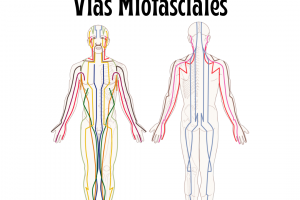
* THE CONNECTION BETWEEN YOGA AND AYURVEDA. In yoga, we have equivalents to meridians, known as nadis, whilst in Ayurveda, we have marmas as equivalents to acupuncture points. The practice of asanas allows us to move and manage “nourishing energy” throughout our body by acting on the energy channels and centres through conscious work on the myofascial system. In the TCMYoga® Methodology, we use various asana-based methods to “manage” the nourishing energy that flows through the body, whether by unblocking the channels, channelling the energy, increasing or decreasing it, and so on.
- Yin Yoga enables you to unblock the channels and reduce excesses
- Yang Yoga It helps to stimulate the flow of Qi and Blood (Xue) and boost energy in specific areas
- AcuYoga It enables you to unblock and manage the flow of energy by balancing it.
- XMYoga It enables one to act by improving the flow of Ying Qi, whilst also tapping into the energy of the Anterior Heaven (that is to say, Karma)
Does your asana practice give you energy or drain it?
Do you feel at peace with your place in the world?
Do you recognise any “blocked” areas in your body?
WEI QI – Defensive Qi
The final way in which Qi energy manifests itself is as a defensive barrier that boosts the immune system. It is located on the body’s surface – in the skin, nerves, tendons and ligaments – and at night it circulates through the internal systems. Its energy derives partly from the Lungs (through breathing), from the Yang of the Kidneys and from the proper functioning of Liver Qi. Chinese massage techniques (Tuina), acupuncture and therapies that act on the skin (cupping, moxibustion, Gua Sha, etc.) improve Wei Qi.
* THE CONNECTION BETWEEN YOGA AND AYURVEDA. Yoga is the oldest practice for managing the autonomic nervous system. Regulating the sympathetic and parasympathetic branches of the nervous system enables healthy stress management and, as a result, boosts our immune system. It is well known that ancient yogis had the ability to manage their health and remain free from illness despite practising under the most challenging conditions (harsh weather, few comforts, etc.).
In Ayurveda, the Defence System is directly linked to OJAS, which is the primordial essence stored in the kidneys and which we gradually deplete as we age. Like any other system of natural medicine, Ayurveda places great emphasis on prevention rather than cure; in other words, on having sufficient energy to enable us to adapt to life’s ups and downs. Furthermore, massage and self-massage with oil form a fundamental pillar of personal self-care and improving one’s health.
All TCMYoga® self-care practices help to boost the immune system through self-massage of the skin using acupressure, balls, self-touch, asanas, etc., which act on the superficial myofascial tissue.
How does stress affect your immune system?
How do you relate to the world and its boundaries?
How do you look after your skin?
© Copyright. This text forms part of Dr Helena Chacón’s TCMYoga® HY Methodology. Reproduction of this article, in whole or in part, is prohibited without the author’s express consent.

You may also like