IS THERE ANY LINK BETWEEN CHINESE MEDICINE, ANATOMY AND YOGA?
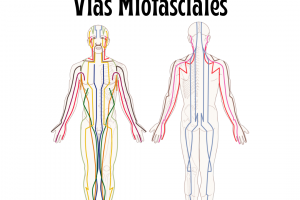
There is only one human body, and discoveries and teachings regarding its therapeutic treatment, whether they come from the East or the West, cannot but go hand in hand. In this sense, there is a similarity between the “Chinese Acupuncture Meridians” and the “Myofascial Tracts (Myer)”. And what are fascias? Fascia is a connective tissue that envelops various muscles and forms a sort of chain. Consequently, distant parts of the body influence one another, which may explain why acupuncture can use points on the feet or hands to treat conditions affecting the head. This diagram shows a very simplified outline of how certain muscle groups act by stretching the fasciae or toning the muscles in the chains to disperse or strengthen the energy in that meridian, respectively. Furthermore, the meridians are usually associated in Yin and Yang pairs, constituting the Five Chinese Elements or Phases (Water, Metal, Wood, Earth, Fire). Water is the element of the Kidney (Yin meridian) and the Bladder (Yang meridian), whose pathways are similar to those of the Anterior Internal Chain and the Posterior Master Chain. This similarity gives rise to numerous therapeutic outcomes and conclusions. As each element is associated with emotions (specifically, the Water element is linked to Fear and Anxiety), we can find ways to address them through postural yoga. For example, a stressed person (excess Water) usually has a tense psoas and erector spinae muscles. They will relax by performing hip-opening poses and restorative extensions that release the psoas. Similarly, we can explain why certain poses are useful in therapeutic yoga for specific conditions, as they apply pressure to specific acupuncture points along the associated meridian. For example, a person with a Water deficiency may experience symptoms such as depression or feel like a victim of life. Their state of mind will change when they perform an inverted pose such as Salamba Sirsasana, which stimulates the Du20 point – an important point that influences the brain by nourishing it and calming the spirit. Interesting, isn’t it?